
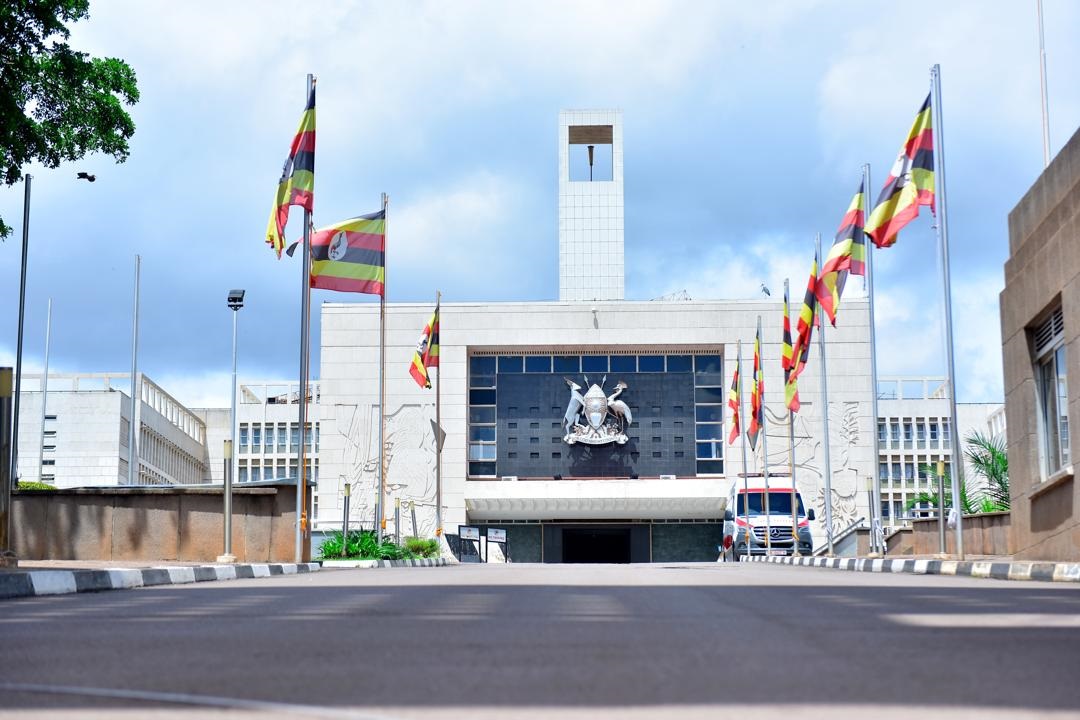
The recent wave of judicial decisions overturning major Ugandan laws has not only reshaped the country’s legal framework—it has also revived a deeper constitutional question: what has become of Parliament’s role as guardian of the Constitution?
Once envisioned under the 1995 Constitution as a deliberative body and a check on executive excess, Parliament is increasingly described by critics as a “rubber stamp”—passing laws later dismantled in court for violating the very Constitution legislators are sworn to uphold.
The nullification of the Computer Misuse (Amendment) Act, 2022 by the Constitutional Court of Uganda is only the latest in a series of high-profile rulings exposing legislative overreach.
The court struck down vague speech offences and faulted Parliament for passing the law without quorum—echoing earlier decisions where the judiciary intervened to correct failures to safeguard constitutional rights.
Among the most notable decisions is the dismantling of key provisions of the Public Order Management Act, which had effectively turned the right to assemble into a police-controlled privilege.
The Supreme Court of Uganda also prohibited military trials for civilians, ending a long-criticised practice that blurred the line between civilian justice and military authority.
Earlier still, courts invalidated “offensive communication” provisions in the original Computer Misuse Act, even before the 2022 amendments attempted to revive similar restrictions.
Each ruling reinforces a pattern: laws passed in the name of order, security, or morality are repeatedly found unconstitutional.
Other statutes have faced similar scrutiny, including sections of the Anti-Pornography Act, restrictive electoral provisions, and legal frameworks enabling preventive arrest or expansive police powers.
Even where not fully struck down, courts have consistently narrowed their scope—signalling discomfort with how broadly Parliament has framed state authority.
Taken together, these rulings reveal a consistent judicial philosophy anchored in three principles: constitutional supremacy, protection of fundamental rights, and rejection of parallel justice systems.
Uganda is also bound by international instruments such as the International Covenant on Civil and Political Rights and the African Charter on Human and Peoples’ Rights. Courts have repeatedly invoked these frameworks when striking down domestic laws.
The persistence of unconstitutional legislation therefore suggests either disregard for these standards—or their subordination to other priorities.
At the heart of this constitutional tension lies the balance between state power and individual freedom. Critics argue that Parliament has gradually shifted from oversight toward alignment with executive priorities.
Laws expanding state control over civil liberties often move swiftly through the legislative pipeline, frequently with limited resistance.
In any constitutional democracy, Parliament represents the people’s will and is entrusted with making laws that reflect national values, protect rights, and uphold the Constitution. When it enacts unconstitutional legislation, the failure is not merely technical—it is a breach of public trust.
Yet the frequency of judicial reversals raises difficult questions. Uganda’s Parliament includes many legally trained legislators, is advised by the Attorney General, and has often been led by legally trained Speakers.
How then do laws with clear constitutional defects survive committee scrutiny, debate, and voting? Why are procedural safeguards such as quorum disregarded? And whose interests are these laws ultimately serving?
A review of key legislation underscores the pattern. The UPDF Act was passed by the 7th Parliament under Speaker Edward Ssekandi and moved by Amama Mbabazi. The Computer Misuse Act (2011) was passed by the 8th Parliament, also under Ssekandi.
The Public Order Management Act (2013) came under the 9th Parliament led by Rebecca Kadaga, moved by Hilary Onek. The Computer Misuse (Amendment) Act (2022) was passed by the 11th Parliament under Anita Among, with Muhammad Nsereko as its sponsor.

Across debates, dissenting voices consistently raised core concerns: vagueness of legal provisions, excessive executive or police discretion, risk of political abuse, conflict with constitutional rights, and incompatibility with international human rights standards.
Yet these objections remained largely procedural, as majority support carried the legislation through.
This suggests the issue is not a lack of legal knowledge, but the marginalisation of cautionary voices within Parliament itself.
During debate on the Computer Misuse (Amendment) Act, 2022, Joel Ssenyonyi warned that vague terms such as “offensive” and “malicious” could be used to criminalise free expression. Nsereko himself acknowledged risks of over-criminalisation if definitions were not tightened.
Debates on the Public Order Management Act saw Abdu Katuntu argue that the law converted freedom of assembly into a permission-based system, while Betty Nambooze warned of its potential use to suppress opposition activity.
Earlier, during discussions on the UPDF Act, Eriya Kategaya raised concerns about extending military jurisdiction to civilians, while Crispus Kiyonga engaged in debate over balancing military discipline with constitutional safeguards.
The Constitution is not an inconvenience to be worked around; it is the foundation upon which Parliament derives its authority. Every bill must be measured against it. When unconstitutional laws emerge, responsibility is collective—but it rests heavily on parliamentary leadership, which sets the tone and ensures legislative rigour.
Equally important are the internal safeguards—committees, legal advisors, and procedural rules—designed to prevent such outcomes. If these mechanisms are failing, Parliament must confront a difficult truth: its internal checks are either ineffective or being undermined.
The consequences are not abstract. Unconstitutional laws create uncertainty, waste public resources when challenged, and erode public confidence. For citizens, this directly affects rights, livelihoods, and access to justice.
Accountability must therefore go beyond quiet acceptance of judicial reversals. Parliament should strengthen pre-enactment constitutional review, empower independent legal scrutiny, and foster a culture where adherence to the Constitution is non-negotiable.
Ultimately, Parliament must decide what it wants to be remembered for: a body that produces laws in volume, or one that upholds the Constitution with integrity.
Without that commitment, each unconstitutional law becomes not just a legal error, but an indictment of the institution itself.
